Leadership with Measurable Financial Results
Environmental responsibility is no longer simply Environmentally, a public relations initiative. It has become a strategic business objective. Policyholders, regulators, investors, and rating agencies increasingly expect insurance companies to demonstrate measurable Environmental, Social, and Governance (ESG) performance while maintaining financial discipline.
The property insurance industry has a unique opportunity to make a meaningful environmental impact without compromising policyholder service or increasing operating costs.
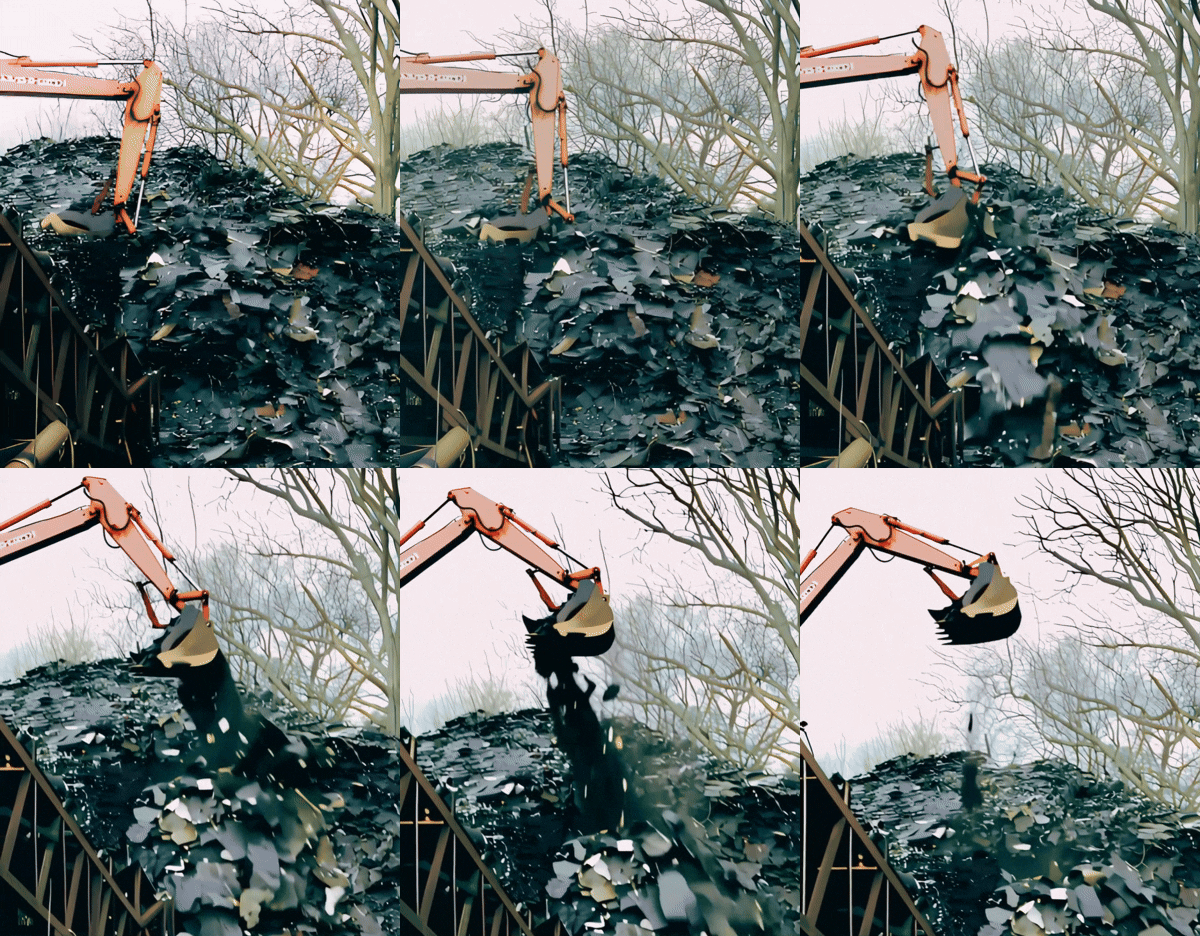
Today, millions of tons of asphalt roofing shingles are removed from homes and transported to landfills each year. Although some recycling programs exist, the overwhelming majority of these materials are discarded after every qualifying roof replacement. This represents one of the largest sources of avoidable construction waste in the residential insurance industry.
Planet Safe Partners offers an alternative.
By enforcing the repair provisions already contained within homeowners insurance policies and repairing qualifying hail-damaged roofs instead of replacing them, insurance carriers can substantially reduce unnecessary roof replacements. Based on our experience, we believe this approach can eliminate approximately 60% of the asphalt shingles currently entering landfills as a result of insured hail losses.
The environmental impact is significant. The financial impact is equally compelling.
Every qualifying roof that is repaired instead of replaced represents:
- A substantial reduction in claim severity.
- Less material entering landfills.
- Reduced demand for new roofing materials and the energy required to manufacture and transport them.
- Lower transportation and disposal costs.
- Reduced carbon emissions throughout the roofing supply chain.
Few corporate sustainability initiatives offer the opportunity t o simultaneously reduce operating expenses, improve claims efficiency, and produce measurable environmental benefits.
For insurance companies, this creates an opportunity to demonstrate industry leadership while strengthening ESG performance with quantifiable results. The environmental benefits are not achieved through additional spending or new policyholder obligations, but simply by utilizing an innovative repair process when replacement is not necessary.
This is more than a roofing solution.
It is an opportunity to reduce claims costs, improve capital efficiency, lessen environmental impact, and demonstrate responsible corporate stewardship—all while fulfilling the promises already contained within your homeowners insurance policies.
The following articles and video provide additional perspective on the magnitude of roofing waste in the United States and why reducing unnecessary roof replacement represents one of the insurance industry’s greatest opportunities for environmental leadership.
From Roofing Insights
From Sky Qyary.com
When most of us think about environmental issues, images of plastic bottles in the ocean or deforestation might come to mind—but have you ever considered the shingles on your roof? Every year, about 15 million tons of asphalt shingles are discarded and end up in North American landfills. To put it simply, these shingles represent an enormous environmental issue hidden right above our heads.
Asphalt shingles are notoriously slow to decompose, often lingering in landfills for hundreds of years. This prolonged decomposition contributes significantly to landfill overcrowding and environmental degradation. Worse yet, this discarded material isn’t just waste—it’s potential energy and valuable resources being lost, including millions of barrels of oil.
From Forbes.com
While shingle waste has previously been reused for paving of roads, that accounts for just 10% of the 13 million tons of shingle waste produced each year. GAF says that its initiative represents the first shingles to be made from recycled content. Its goal is to divert one million tons of shingle waste from landfills by 2030. That would represent roughly 1% of the total shingle waste produced in that time period, assuming current rates stay steady.
“We committed to diverting 1 million tons of roofing waste per year from landfills by 2030.”
“We invested $100 million to build our first full-size asphalt shingle recycling operation in Corsicana, Texas.”
At Planet Safe we think that A $100 million dollar investment to eliminate 1% of the waste seems like a bad investment.